Chhatrapati Sambhajinagar, formerly known as Aurangabad, is the official name since 2023 to honour Chhatrapati Sambhaji Maharaj. Some people especially older residents or tourists still use “Aurangabad” out of historical references & also out of habit . It is the largest city in the Maratha Region.
In 1653, when Mughal prince Aurangzeb was appointed as the viceroy of the Deccan for the 2nd time, he made Fatehnagar renamed as Aurangabad. It is located on a hilly upload terrain the Deccan Traps Aurangabad city I the confluence of our Indian history, culture & various historical events over the years. This city have many layers of historical influence like Mughals & Maratha but also buddhists monk of 200 BC.
Presently Aurangabad is a famous tourist hub which was declared by Govt as “Tourism Capital of Maharastra “ back in 2010 from UNESCO World Heritage sites to glowing local markets with silk items & exquisite hand-woven garments. This city also have a delicious Mughal cuisine to offer to its tourists.
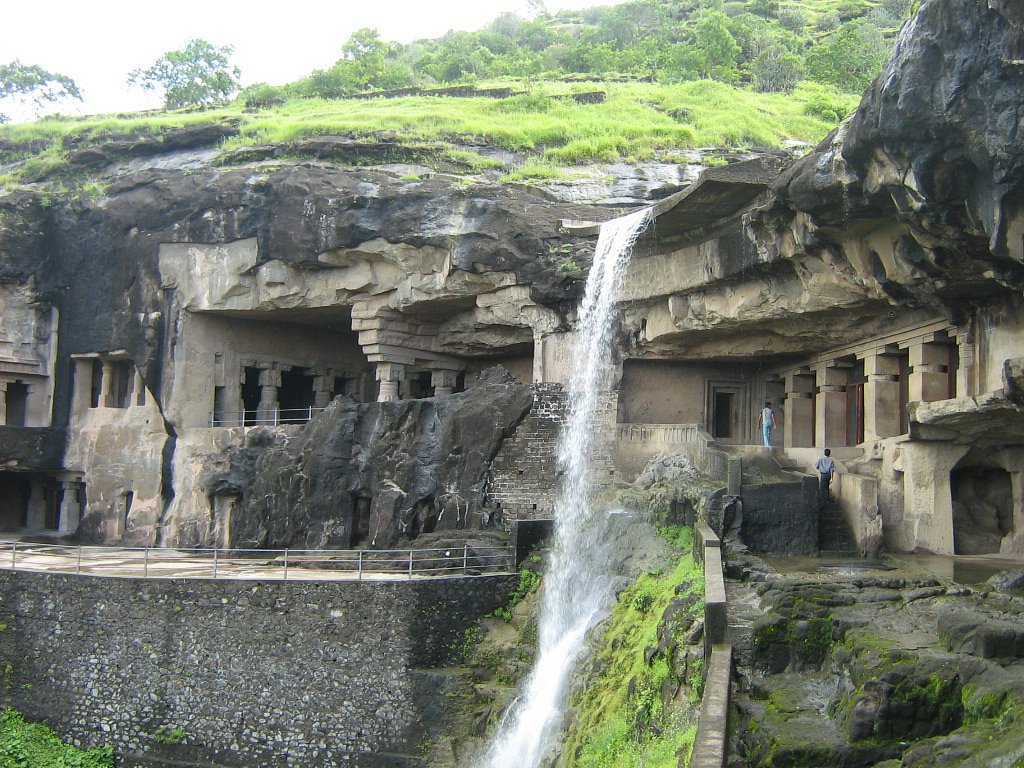
Best Time to visit –
The best time to visit Aurangabad is during the winter months from October to February.
Travel :
Aurangabad is very well connected with different cities of India in all means of transport.
Airport: Aurangabad has its own airport which is directly connected with major cities like Delhi ,Mumbai, Bengaluru ,Goa ,Hyderabad.
Railway Station : Chhatrapati Sambhajinagar Railway station is well connected with all of the major state railways.
Bus Stand: Major cities are also connected to Aurangabad by bus route through National Highways by inter state buses.
A 3 day visit to Aurangabad’s Notable places which will captivate the mind into our country’s vast history.
Day1 :
Arrive in the city . Have breakfast & start the day with a intensive travel towards Ajanta Caves which is almost 100km away from the city .
Ajanta Caves :
One of the India’s most stunning UNESCO World Heritage sites hidden away in the Sahyadri Hills of Aurangabad . These Caves have been carved by slicing mountain face by delicate chisel strokes of monks & artisans over 2000years ago. These are not just carvings of mountains or rocks they are ancient universities, prayer halls & art galleries carves entirely out of solid basalt rocks.
Location- Approximately 100km from Aurangabad City.
Time period – 2nd century BCE – 6th century CE .
Key theme – Buddhism (love of Buddha & Jataka Tales)
Hidden in a horse shoe shaped ravine along the Wagora river,The Ajanta Caves were lost to the World for over a thousand years. The complex consists of 30 rock cut caves including prayer hill (chaityas) & monasteries (Viharas).
Speciality : Unlike the most ancient sites that are famous for sculptures ,Ajanta is celebrated for its paintings. these are not simple frescoes, they are elaborate morals created using natural pigments that have survived centuries of darkness.
Although every one must visit all the caves carved dedicating 1 or 2 whole day as it is the most life time experience of unique carvings & learning about the ancient way of life. Yet some of the must visit caves in Ajanta are :-
Cave 1- this contains themes famous masterpieces of Indian Art-the paintings of Bodhisattva Padmapani & Vajra pain. The expression on the Bodisattva’s face is said to change depending on where the light hits it.
Cave 2- this is famous for its ceiling decorations ,intricate geometric patterns & powerful sculptures of Yakshas (Nature spirits ).
Cave 9 & 10- the oldest cave in the complex (Hinayana Phase ), featuring stupas & simple, yet massive prayer halls.
Cave 26 – A large Chaitra hall with a stunning sculpture of the Reclining Buddha (Parinirvana) ,depicting the Buddha’s final moments before death.
Note : Anjanta closed on Monday.
Take rest at night for the next day tour.
Day 2 :
Start the day with refreshing Mughal Cuisine like naan khaliya and get ready for the city tour.
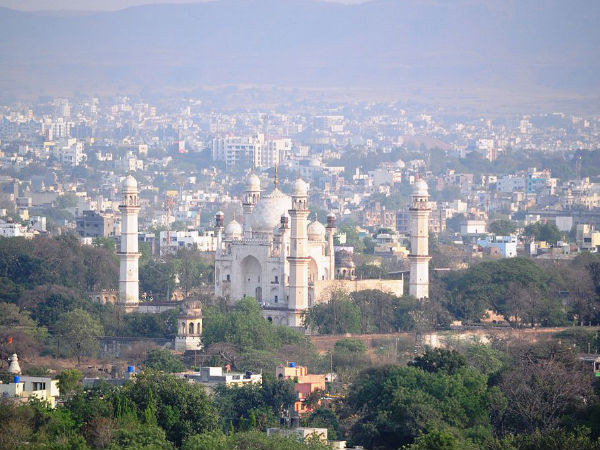
- Bibi ka Maqbara – 1st head towards the Taj of the Deccan. At a first glance ,all might rub their eyes – it looks strikingly like the Taj Mahal in Agra. But this isn’t a copy; its a “sister” monument with its own poignant story & often called “the Taj of the Deccan(Dakhani Taj).
- Aurangabad Fort – it is commonly refer as Daulatabad fort also known as “Devagiri” (Land of God) it is 16km from the city & historical name is Devagiri. It takes about 600-700 steps to reach the summit. The view from the top is spectacular . The 360 degree view of the entire landscape of Aurangabad & it gets incredibly windy & cool up there.
- Panch chakki – it literally meaning “ water mill “ is a historical & engineering marvel located in Aurangabad . It is an excellent example of medieval Indian engineering . The mill is powered by an ingenious underground water channels that brings water from a spring on a mountain (Jatwada hills) over 6km away.
- Bani begum Garden – It is a serene mural garden about 25 km from the city . It is a classic example of a Mughal Chahar Baag I.e, 4 part garden design divided by water channels & paths mughal architectural elegance.
- Chhatrapati Shivaji Museum – This museum is a tribute to the life & legacy of the lChhatrapati Shivaji Maharaj & the valour of the Maratha empire. This offers a quick & educational window into the rich military & cultural history of the Marathas. Note : it is closed on Thursday.
- Himayat bagh & salim ali Lake– they are adjacent offering a perfect blend of mughal history, horticulture & bird watching in Aurangabad.
Himayat Bagh is a sprawling 300-400 acre garden that serves as the city “oxygen hub”. Once a royal Mughal garden it is now a peaceful retreat 7 a centre of Fruit Research Station & nursery.
Salim Ali Lake or well known as Sarovar is a tranquil body of water named after the famous Indian ornithologist Dr. Salim Ali.
Have a good sleep and energise for the next day tour.
Day 3:
Last day of the tour will be a experience of amalgamation of religious harmony that co existed once peacefully. It is Ellora caves.
While Ajanta cave is tucked away in the Gorge, Ellora Stands proudly on a sloping hill. Ellora cave is also one of the most stunning UNESCO world heritage sites, hidden away in the hills of Aurangabad.
Location : 30 km from Aurangabad city.
Time period- 6th century CE- 10TH Century CE.
Key theme – Religious harmony (Buddhism, Hinduism & Jainism)
Speciality :Ellora stands proudly on a sloping hill. It Is younger than Ajanta & represents a time in Indian history when three major religions coexisted peacefully.
There are 34 caves in totaal : 12 buddhist, 17 hindu & 5 jain.
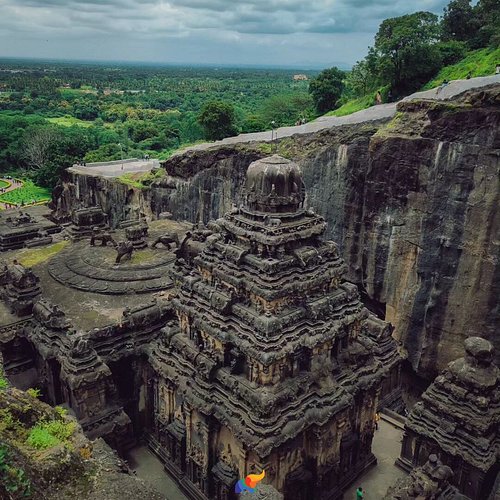
Cave 16 :(the crown jewel : the Kailash temple)
The only one thing which is the must of the entire Aurangabad tour id this Kailasha Temple i.e, Cave 16. The Kailash temple is to “built “ in the traditional sense, it was excavated.
Artisans stated at the top of the mountains & dug downwards , moving over 2 lakh tonnes of rock to reveal a monolithic temple structure . It is the largest monolithic structure in the world.
Other must visit caves in Ellora :
Cave 10- Vishwakarma Cave: the “carpenter’s cave”. The ceiling is carved to look like wooden beams, though it is entirely stone. The acoustics here are mesmerising – a single hum echoes beautifully.
Cave 15 (Dashavatara Cave ): Former buddhist monastery converted into a hindu temple featuring a dramatic sculpture of Lord Shiva as Nataraj.
Cave 32 (Indra Sabha): A join cave that carved like the miniature of the Kailash temple . It is incredibly ornate, with fine carvings of lotus flower & Tirthankars.
In brief, Aurangabad trip is a different experience altogether as it has a unique refreshing contrasts nicely with heavy historical exploration of the foots & caves of the ancient times. It not only drives back in monolith era but also gives a tour of each & every historical confluence in our country.